)
)
From representation to influence: the leadership challenge every growing business should be tackling
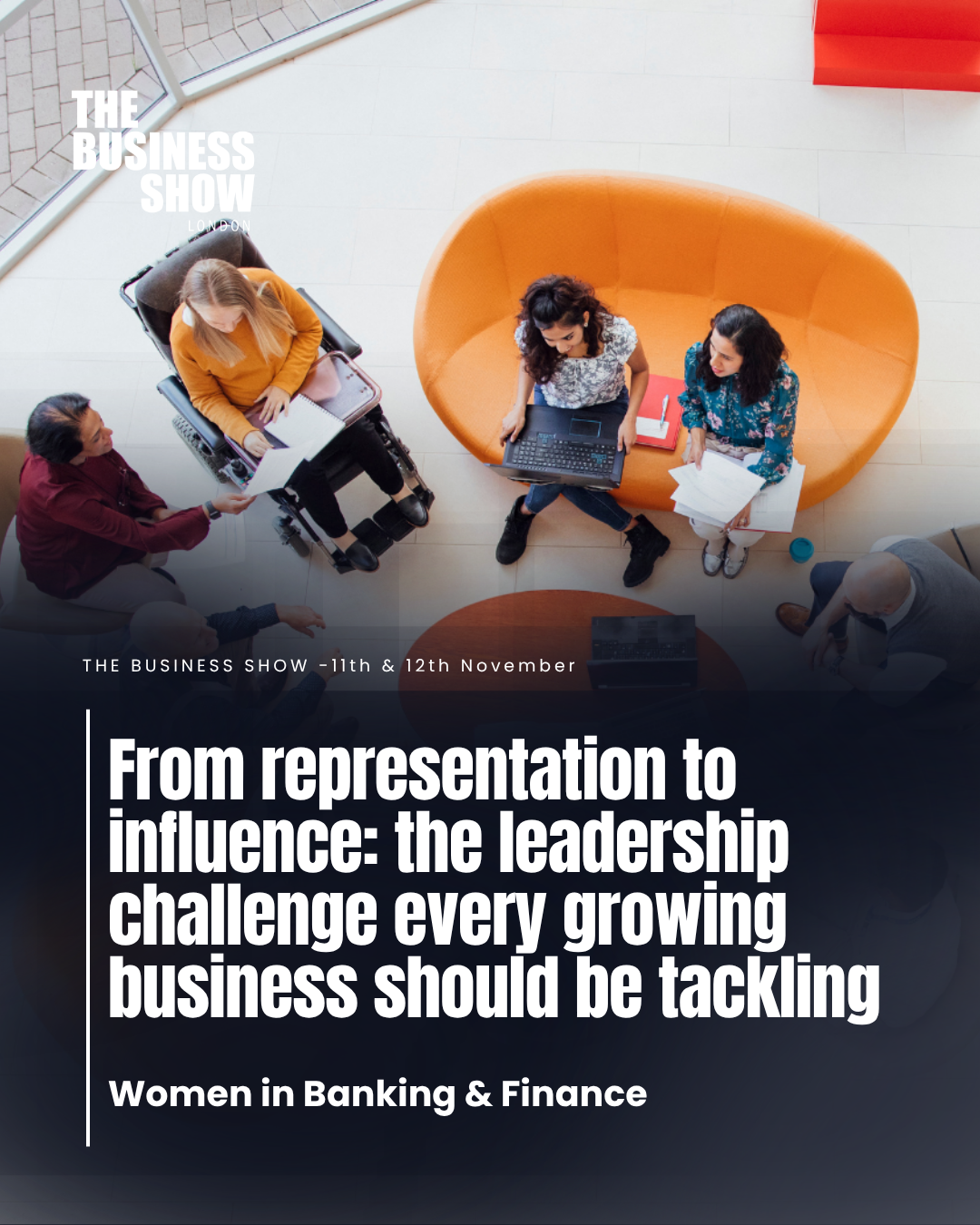
For many small and growing businesses, diversity can feel like something to focus on later, once the organisation has grown or the leadership team has expanded. In reality, the opposite is often true. The habits, culture and decision-making processes established in the early years frequently shape a business for decades, making inclusive leadership a competitive advantage from the very beginning rather than a consideration for the future. At Women in Banking & Finance (WIBF), we believe the conversation now needs to move beyond representation and towards influence. Diversity should not simply be measured by who has a seat at the table, but by who helps shape the decisions that determine a business's future.
As customers, employees and markets become increasingly diverse, business leaders need equally diverse perspectives to understand changing expectations, identify opportunities and avoid costly blind spots. This is particularly important for SMEs. Smaller organisations often make decisions faster than larger businesses, but they also have fewer people around the table, meaning every voice carries greater weight. If everyone shares similar experiences, backgrounds or ways of thinking, businesses risk missing opportunities, misunderstanding customers or making strategic decisions based on assumptions rather than insight. Representation tells us who is present; influence tells us who is genuinely heard.
As businesses embrace AI, launch new products, seek investment or expand into new markets, leaders should ask themselves some important questions. Who is influencing our strategy? Who challenges our thinking when we're making decisions about technology, customers, investment or growth? Who brings a different perspective that helps identify risks, question assumptions or spot opportunities others may have overlooked? The businesses that ask these questions early are often the ones that build stronger, more resilient organisations over time.
The commercial benefits of inclusive leadership are well established. Teams with diverse perspectives tend to make better decisions because they challenge conventional thinking and consider a broader range of risks and opportunities. They are often more innovative because they draw on different experiences and ideas, while also being better positioned to attract and retain talented people who want to work in organisations where different viewpoints are genuinely valued. For growing businesses, this can be a significant competitive advantage. SMEs rarely compete with larger organisations on size or resources alone; they compete through agility, innovation and their ability to build strong relationships with customers. Inclusive leadership strengthens all three.
Perhaps most importantly, influence shapes culture. When people see that ideas are valued regardless of seniority or background, they are more likely to contribute, challenge constructively and take ownership. That creates organisations that are more adaptable, more resilient and better equipped to respond to change. It also sends a powerful message to future employees, customers and investors about the kind of business you are building.
Ultimately, this isn't about quotas or ticking boxes. It's about creating businesses that make better decisions and are better prepared for the future. The organisations that outperform over the next decade won't simply measure diversity; they'll ensure diverse voices help shape strategy, innovation and growth. For SMEs looking to build sustainable, successful businesses, that may prove to be one of the smartest investments they make.
Want to learn more about Women In Banking & Finance? Click here to check them out.